.png&w=128&q=75)


Plug-in Hybrid Vehicles
Toyota Plug-in Hybrid Electric FAQs
Learn how Toyota Plug-in Hybrid Electric vehicles work, when they use electric power, and how charging fits into everyday driving.
Read More
Posted in Electric Vehicles
Hybrid Electric vehicles are often the starting point for drivers looking into Toyota’s electrified range, but there are still plenty of questions around how they actually work day to day. If you are comparing Hybrid models with Plug-in Hybrid or Battery Electric vehicles, wondering how the battery charges, or trying to understand servicing and ownership, this Toyota FAQ covers the key things to know.
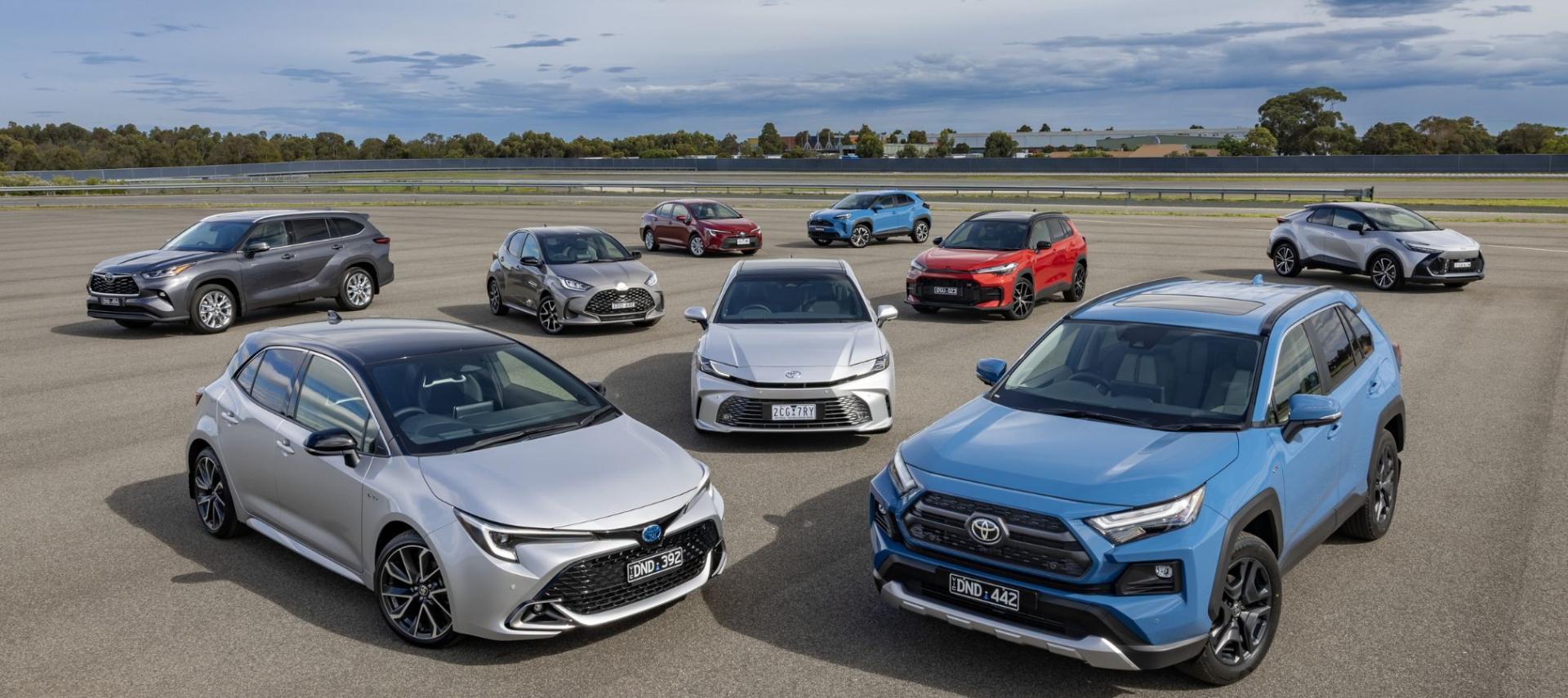
A Hybrid Electric car is a vehicle that sits at the crossroads of the present and future. Combining both petrol engine technology together with batteries and electric motors to generate more power and increase efficiency on both ends.
Hybrid Electric Vehicles combine the efficiency of petrol engines with the instant torque of electric motors, giving you more range, and more excitement in every drive. HEVs bolsters the power generated by the petrol engine with the instant torque of the electric motors while also recharging their batteries by recapturing energy being created by the petrol engine.
A HEV self-charges its battery by recovering energy generated by the petrol engine and through regenerative braking. Unlike other PHEVs, you can't plug it in to recharge the battery externally. Simply fuel it up just as you would a conventional petrol or diesel vehicle.
A PHEV operates similarly to a HEV by self-charging its battery and using fuel, but it features a significantly larger traction battery. This increased battery capacity enables external recharging via a dedicated home charging unit or a public charging station. Due to its bigger battery, PHEVs can store much more electrical energy than a standard HEV, minimising fuel consumption by extending the distance you can cover in EV-only mode.
In a HEV, the battery is recharged while you drive with the help of its internal petrol combustion engine. During deceleration or when braking, the electric motor continues to generate power, storing it in the vehicle’s battery to keep it charged. When accelerating or cruising at high speeds, the petrol engine turns on automatically for extra power and responsive performance when you need it. It means your HEV is always ready to go without ever needing to be plugged in.
The high-voltage Hybrid Electric 'traction battery' won’t run out of charge, as it recharges while it drives with the support of the vehicle’s petrol internal combustion engine.
During your Toyota Service AdvantageTS1 period, all servicing costs are capped at the same price for both Hybrid Electric and conventional models. However, once this period expires, you may need to factor in additional servicing requirements, which could increase the annual cost of your service.
No. A Toyota HEV can only operate in electric mode when petrol is in the tank.
The life of a Hybrid Electric Vehicle and a Hybrid Electric traction battery varies based on usage and environmental factors. For HEVs bought before 1 January 2019, you’ll get eight years or 160,000km of coverage for your Hybrid Electric traction battery from the date of first delivery. For HEVs bought after 1 January 2019, you’ll get up to 10 years of coverage for your Hybrid Electric traction battery, provided you undertake your annual inspection as part of routine maintenance as suggested by the vehicle logbook.
No. HEVs can come with different drivetrains such as All-Wheel Drive and Front-Wheel Drive systems. These vary in size, power output and other performance factors depending on the model.
C11 - Product & company names are trademarks of their respective owners.
G65 - Charging times are indicative and may vary depending on environmental and charging conditions, type of charger and method used. Actual charging times may differ. Frequent use of DC Fast Charging can impact battery performance & durability. Toyota recommends minimising DC Fast Charging usage. DC fast charging speed will reduce after the battery is charged to 80%. Refer to Owner's manual and toyota.com.au/explore/electrified/charging-your-toyota for guidance.
G66 - Results were achieved under test conditions and do not reflect the driving range in real world driving. Results achieved for Battery Electric bZ4X 2WD Automatic SUV is based on consumption rate of 138Wh/km using the Worldwide Harmonised Light Vehicle Test Procedure (WLTP) accepted by the ADR 81/02 (displayed on the Energy Consumption label affixed to the car). The electric range and the energy consumption values were determined using a fully charged battery in a laboratory test and are not reflective of real-world driving. Actual driving range may vary depending on accessories fitted, battery age and condition, climate, driving style, use of heating/cooling, traffic conditions, and vehicle load. For more information, please visit Toyota.com.au/explore/electrified/faqs
G67 - Results were achieved under test conditions and do not reflect the driving range in real world driving. Results achieved for Battery Electric bZ4X AWD Automatic SUV is based on consumption rate of 160Wh/km using the Worldwide Harmonised Light Vehicle Test Procedure (WLTP) accepted by the ADR 81/02 (displayed on the Energy Consumption label affixed to the car). The electric range and the energy consumption values were determined using a fully charged battery in a laboratory test and are not reflective of real-world driving. Actual driving range may vary depending on accessories fitted, battery age and condition, climate, driving style, use of heating/cooling, traffic conditions, and vehicle load. For more information, please visit Toyota.com.au/explore/electrified/faqs
G82 - Indicative charging time based on 150kW DC charging at an ambient temperature of around 0°C
M1 - Stock availability and suitability to your vehicle should be confirmed at the time of ordering with your Toyota dealer. To the extent permitted by law, Toyota Australia will not be liable for any damage or loss incurred in relation to third party products (whether by way of negligence or otherwise). Toyota Motor Corporation Australia Limited ABN 64 009 686 097 155 Bertie St, Port Melbourne Vic 3207
TS1 - Applies to standard scheduled logbook servicing (normal operating conditions) for 5 years or 15,000 kms (whichever occurs first) up to a maximum of 5 services. Excludes Rental vehicles. For details, see your Toyota dealer or visit toyota.com.au/advantage.
W14 - The Toyota Warranty Advantage (TWA) Traction Battery coverage (excluding traction battery capacity degradation issues) is for up to 10yrs, with unlimited kms, from date of first delivery. It is comprised of the standard 5yr TWA and extended each year for an additional 5yrs with an annual Traction Battery health check inspection according to Toyota specifications and, for electric vehicles only, provided operation, charging and maintenance complies with Toyota EV Operating Instructions. Excludes vehicles used for a commercial purpose, such as taxis, hire vehicles and vehicles transporting people or goods for payment including rideshare. See toyota.com.au/owners/warranty or your vehicle’s Warranty and Service Book for T&Cs. The TWA does not limit and may not necessarily exceed your rights under the Australian Consumer Law.


