.png&w=128&q=75)


How Charging Works In The Toyota RAV4 Plug-In Hybrid
Posted in Plug In Hybrid Vehicles
Article by Downtown Toyota Brisbane’s Jon Wimhurst, Senior Toyota Sales Consultant
The charging side is the bit people are going to ask about first. They want to know how they charge it, where they charge it, how long it takes, how often they have to do it, and what happens if they forget, that is normal. If you have never owned anything plug-in before, of course that is where your head goes.
But I would not make it more complicated than it needs to be, you plug her in to the power point at home in the garage or the carport, let her charge, and away you go, the important thing to understand is that this is not a full electric car. It is a Plug-In Hybrid, so you still have petrol and the normal hybrid system there as well.
That is the part that makes it easier for a lot of people to get their head around. You are not relying only on charging. Charging gives you the benefit of using the electric side of the car, particularly for short day-to-day driving, but if you have not charged it or you are heading further than the electric range, you have still got the hybrid system and petrol engine there to keep you moving.
You can charge it at home
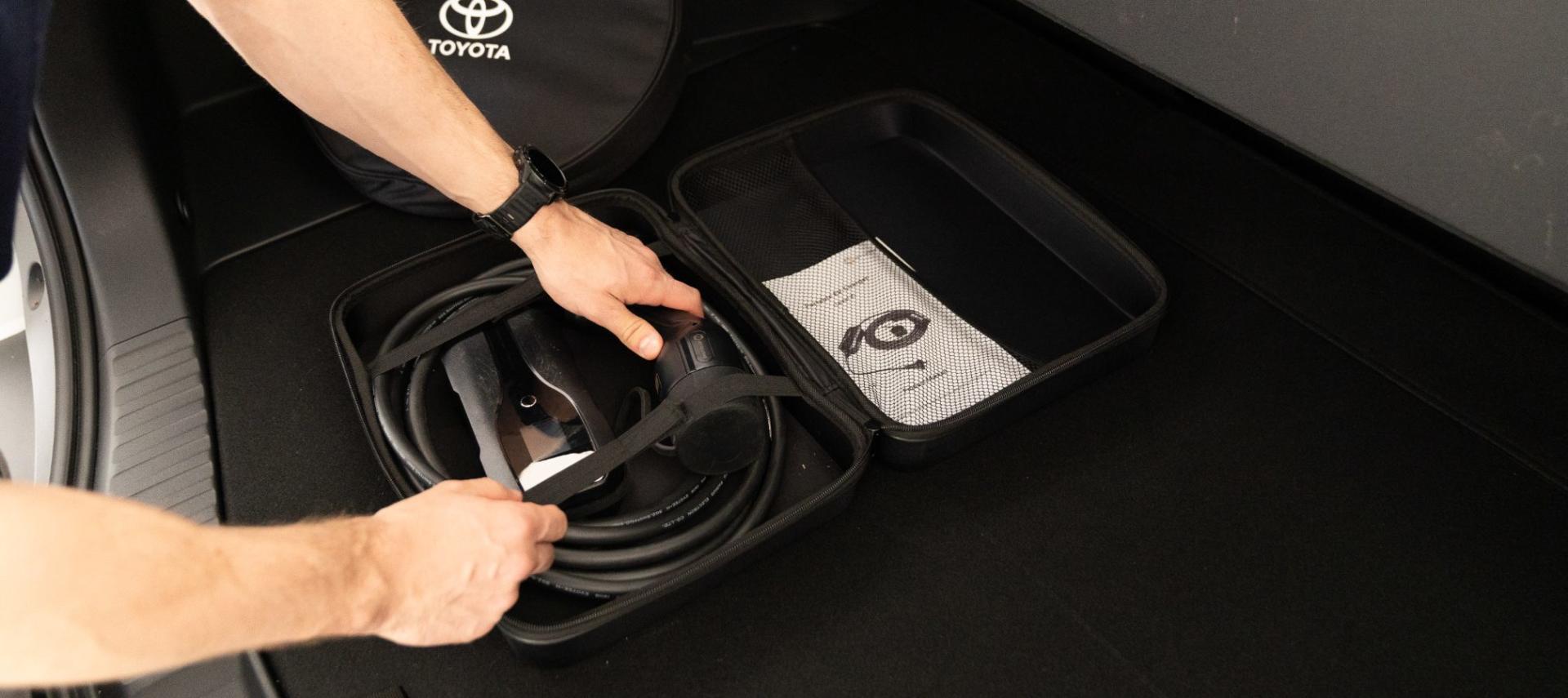
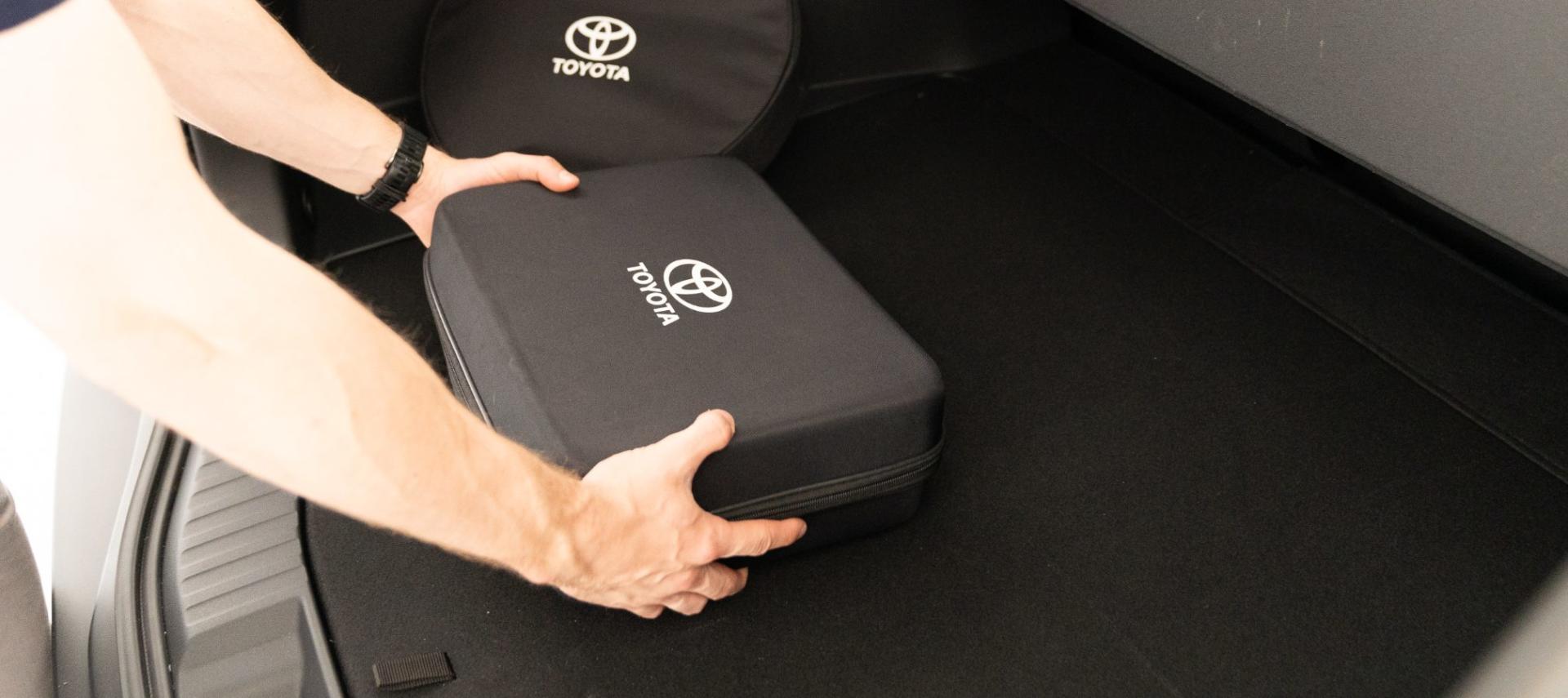
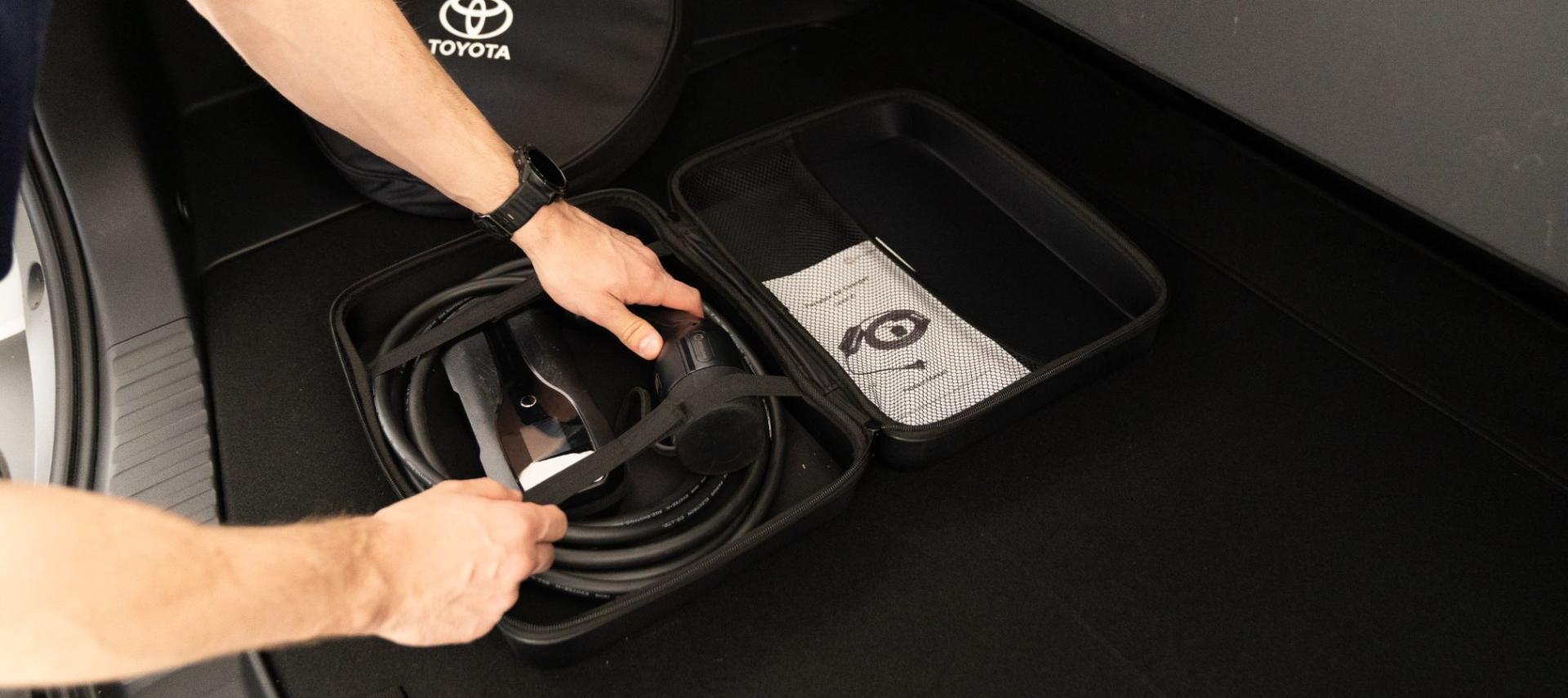
At home, the idea is simple. You plug it in to the standard power point, let it charge, and then it is ready for the sort of short driving most people do through the week. That could be work and back, school runs, local driving, shops, that sort of thing.
I said this to my wife because she said she did not want an electric car. I said, “That is fine, you do not have to have an electric car. But this is what the new RAV can do.” If I can plug it in at home for a few hours, and her work drive is only short, then she could be using the electric side most of the week. That is where it makes sense.
It is not about changing your whole life around charging. It is more a case of looking at your normal week and asking whether the electric side of the car can do a fair chunk of that work for you. If you come home, know you are not going out again, and the car could use a top-up, you plug her in. Then when you need it next, it is ready to go.
For a lot of customers, that is going to be the easiest way to use it. Charge it at home, use the electric range for shorter local driving, then use the petrol hybrid side when the trip is longer or when that makes more sense.
You can also charge while you are out
If you are at the shops and there is a charging station there, you can plug her in while you are doing what you are already there to do. You plug it in, lock the car, go and do your shopping, and come back to it. It is not a case where you have to stand next to the car and babysit it, when the car is locked, the charger is locked in with it, so someone cannot just walk up and pull it out while you are away. That gives people a bit of peace of mind, because they can go off, do the shopping, have lunch, whatever it might be, and come back to the car afterwards.
That is the nice thing about it, you are not necessarily making a special trip just to charge the car, if you are already at a shopping centre or somewhere that has a charging point, and you feel like you want to top it up, you can. If you do not need to, you do not have to.
As far as how often you charge it, it is really when you need to or when you want to. If you want to top it up every day, you can. If you get home and you know you are not going out again, plug her in for a couple of hours. If you have enough charge for what you are doing, then you may not need to.
The car will tell you what is going on. You will have information on the dash showing what charge you have left, so you are not guessing. If you want to use the electric side more often, then you charge it more often. If you are happy to use the normal hybrid side as well, then you have got that flexibility. That is the beauty of it.
What if you forget?
This is the good bit. If you forget to charge it, you are not stuck. You still have the normal hybrid side, you still have petrol, and you can press the normal drive mode and keep driving.
That is why I think the Plug-In Hybrid will be easier for a lot of people to live with than they might first think. With a full EV, charging is everything. With a Plug-In Hybrid, charging is an advantage, but it is not the only way the car works.
If you are doing short trips and you have charge available, use the electric side. If you are heading further away, or you have not charged it, or you just want to drive it like a normal hybrid for that trip, you can do that as well. You are not locked into one way of using the car.
That is really the point of the Plug-In Hybrid. You can use electric when it suits, use hybrid when it suits, and fill it with fuel when you need to. That is not an arduous thing. It is just another option.
To find out more about your options with the Toyota RAV4 and Toyota Electrified contact Jon and the team at Brisbane’s Downtown Toyota today.
About Jon
Jon Wimhurst is a Senior Sales Consultant at Brisbane’s Downtown Toyota and has been around Toyota for a long time, starting back in Sydney in 1986 and recently celebrated 25 years with Downtown Toyota. Jon and his wife love their Toyota RAV4. Jon’s approach with customers is pretty simple. He looks to understand what his clients are actually using the car for, what their day-to-day looks like, and which features are genuinely going to matter once they drive out of the dealership. He is not just looking at a spec sheet and saying, “This is the one.” He asks his clients questions on what the car needs to do for their lifestyle before he matches a vehicle to them.
Enquiry Form


